
Major General Sujan Singh Uban, a legendary veteran of the Second World War, was a natural choice to raise, train and command the Special Frontier Force and mould them into a well oiled fighting machine, recalls his son Inspector General Gurdip Singh Uban (retd), who led SFF troops during the Kargil War.

'The Chinese forces in the narrow Chumbi Valley are currently in the line of sight and fire of Indian forces poised on the ridges along the Sikkim-Tibet border.' 'Aware of this vulnerability, the Chinese have been eyeing the Doklam plateau,' explains national security expert Nitin A Gokhale.

'China, much more than Pakistan, is a credible potential adversary with the ability to hurt our interests.' 'It must figure higher in our national security concerns,' says Vice Admiral Premvir Das (retd).
'Given the present force levels, India cannot fight and win.' 'India can't hope to terminate the conflict on India's terms and impose the nation's will upon the adversaries,' says Brigadier Gurmeet Kanwal (retd).
In all the noise surrounding the Dok La confrontation, Claude Arpi focuses on a crucial issue that has hardly been covered -- the construction of roads for the armed forces and the local population to reach the most remote border posts.
'Our strategy should be to 'hold the line' in the north on the Sino-Indian land frontier, but maintain and, if possible, enlarge India's current edge in the maritime south.'

'That the two sides allowed such a situation to arise exposed the level of inaction and inefficiency in China-India border management.' 'The Modi-Xi meeting in Xiamen initiated a process to to avert such contingencies in the future.'

'Like Nehru, too, Modi has found dealing with Beijing more and more difficult and has adopted an increasingly assertive approach towards managing India's northern neighbour.'

Important for India was Xi's meeting with representatives of PLA officers and soldiers stationed in Tibet. The video of the encounter was interesting to watch, especially the large number of lieutenant generals and major generals, observes Claude Arpi.
India has the ability in all respects to be a great power and address our security challenges in the best national interests, says Commodore Venugopal Menon (retd).
'Demchock and Chumar are important crucibles for both China and India to know about the other. While India 'learns,' she also need to 'teach,' suggests Lieutenant General Anil Chait, one of the Indian Army's most cerebral thinkers, who recently retired as chief of the Integrated Defence Staff.

'The logical step is to challenge the very legitimacy of the Chinese claim over Tibet,' recommends Inspector General Gurdip Singh Uban (retd).

'There are major implications for India. Though there was a transparently thin attempt to project the troop reduction as intended to promote peace, the downsizing is actually part of plans to streamline and strengthen the PLA, capable of defending China's national interests at home and abroad,' says Jayadev Ranade.
In fact, given the current tensions and massed troops on both sides, there is a danger that the LAC will become more like the Line of Control with Pakistan, a heavily fortified and strongly defended border where weapon fire exchanges regularly occur. Indeed, Stratfor Worldview research has listed a sharp increase in new Chinese facilities along the LAC in 2019-20.

'This is the only place on earth where Elephas maximus climbs to these heights.'

Very few today realise that without Brigadier John Dalvi's courage, we would never have known what really happened during those tragic days of October/November 1962, reveals Claude Arpi.

The India-Japan joint naval exercises are a strategic signal for China, observes Dr Rajaram Panda.

For two decades the US paid in blood and blood money for dependence on Pakistan to carry out one president's boast. Now, having been defeated by its proxies, another president will go into Rawalpindi's embrace to satisfy his constituents, predicts Shekhar Gupta.

'Clearly, there is a wide gap between the stated intentions of China's top leadership to improve relations with India and the PLA's aggressive border management,' says Brigadier Gurmeet Kanwal (retd).

The chaos on its stock markets, a fierce battle between the old and new guard in the Communist Party and the restive border provinces of Tibet and Xinjiang forebode tough times ahead for China, says Claude Arpi.

A war hero looks back at the men and the moments that forged India's greatest military victory.
'The Himmatsinghji Report is still 'missing'.' 'It is a great loss for the knowledge of India's borders.' 'It would have an immense value at a time China is bound to shift its attention to other border fronts in the Himalayas,' notes Claude Arpi.

Confronting a slowdown in growth, China says it will only increase its defence budget by 7.6% this year, against the anticipated rise of between 20% and 30%. 'It is difficult to explain the reduction in the Chinese defence budget,' says Claude Arpi. 'Is there a hidden budget? Possibly!'

When China protested strongly over the August decision on J&K -- not once but twice -- we ignored it. And to compound matters, we simply turned our back and walked over to the 'Quad' alliance with the US, upgrading it to ministerial level, and thereafter began following the American footfalls on Taiwan and COVID-19 to taunt and humiliate Beijing, observes Ambassador M K Bhadrakumar.
'After more than 20 years of understanding, nothing much seems to have been achieved. What the two countries have been trying to do is to manage the recurrence of border incursions. The two sides must address the disease, and not the symptom of the disease,' says Rup Narayan Das.

'You have been surrounded from all directions, if you want the safety of your troops and your personal safety, we will give you eight hours to make up your mind to surrender.'

The Siang is a dramatic river that flows through a beautiful land. Rafting on it is a rare pleasure the state offers tourists, says Ajai Shukla.

We present our alphabet of 2020, pulling in everything you'll remember about this year we'd rather forget.

'I realised what a great leader he was by the way he took decisions to undertake the most-risky of missions.'

'This is a movie made with this gaze fixed on its immediate well-wishers, while at the same time it squints hard looking for those swaying back and forth on the fence,' notes Rohit Sathish Nair.

'The Kashmiri identity and its unique blend of Sufi Islam, its culture and language can best survive in a plural and secular India.' 'Neither independence nor merger with Pakistan can achieve that objective.' 'Peace will return to Kashmir only when Kashmiris realise this, else they will be part of the 1,000- year war,' says Colonel Anil A Athale (retd).
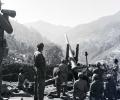
Fifty years ago, India and Pakistan fought a short but bloody war. The author finds out how Sainik Samachar, the defence ministry's journal, reported it.

'We don't know what the reasons were that we gave back the Haji Pir Pass which was strategically very important. Today the entire infiltration into Kashmir takes place from that area. If we had retained that post that we had captured, things could have been different.' 'A lesson we need to learn is if you start losing the gains of war at the negotiating table, they become a disincentive for future wars,' says Lieutenant General D B Shekatkar (retd), reviewing the lessons from the 1965 War.

'India was in no position to wage another war in 1965, having suffered a morale-shattering defeat in 1962. The three services were in the middle of a modernisation and expansion phase and therefore not fully trained or battle-ready.'

'The Gita was propounded on a battlefield and regards the use of force to establish Dharma or righteousness, as not only legitimate but one's highest duty,' says Colonel Anil Athale (retd).

'Openness is a great weapon in the armoury of more open societies. That's why the fight with Pakistan isn't just about India be six times bigger, but equally bitter and insecure Pakistan,' argues Shekhar Gupta.

'If Indian armed forces entered Pakistan and succeeded in inflicting major damage on the Pakistani army and occupied territory in the Pakistani heartland, there is reason to think the Pakistani military would use some nuclear weapons against the incoming Indian forces to compel India to stop.'
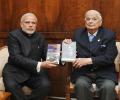
Tarun Vijay, MP, salutes the General whom he adored as a great friend.

Lieutenant General J F R Jacob, Chief of Staff, Eastern Army Command during the 1971 war, revealed how, armed with only a draft surrender document and an aide, he made the Pakistani army led by Lieutenant General A A K Niazi surrender.
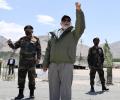
'Breaking down silos and ensuring a more integrated governance process is just as important to performance.' 'It has been a major priority in the last six years, especially in national security,' External Affairs Minister Dr Subrahmanyam Jaishankar points out when delivering the Sardar Patel Memorial Lecture-2020: India and the Post-Covid World.
 © 2026 Rediff.com - Advertise with us - Disclaimer - Privacy Policy - Sitemap - Feedback - About us - Terms of use - Grievances